Popular Models
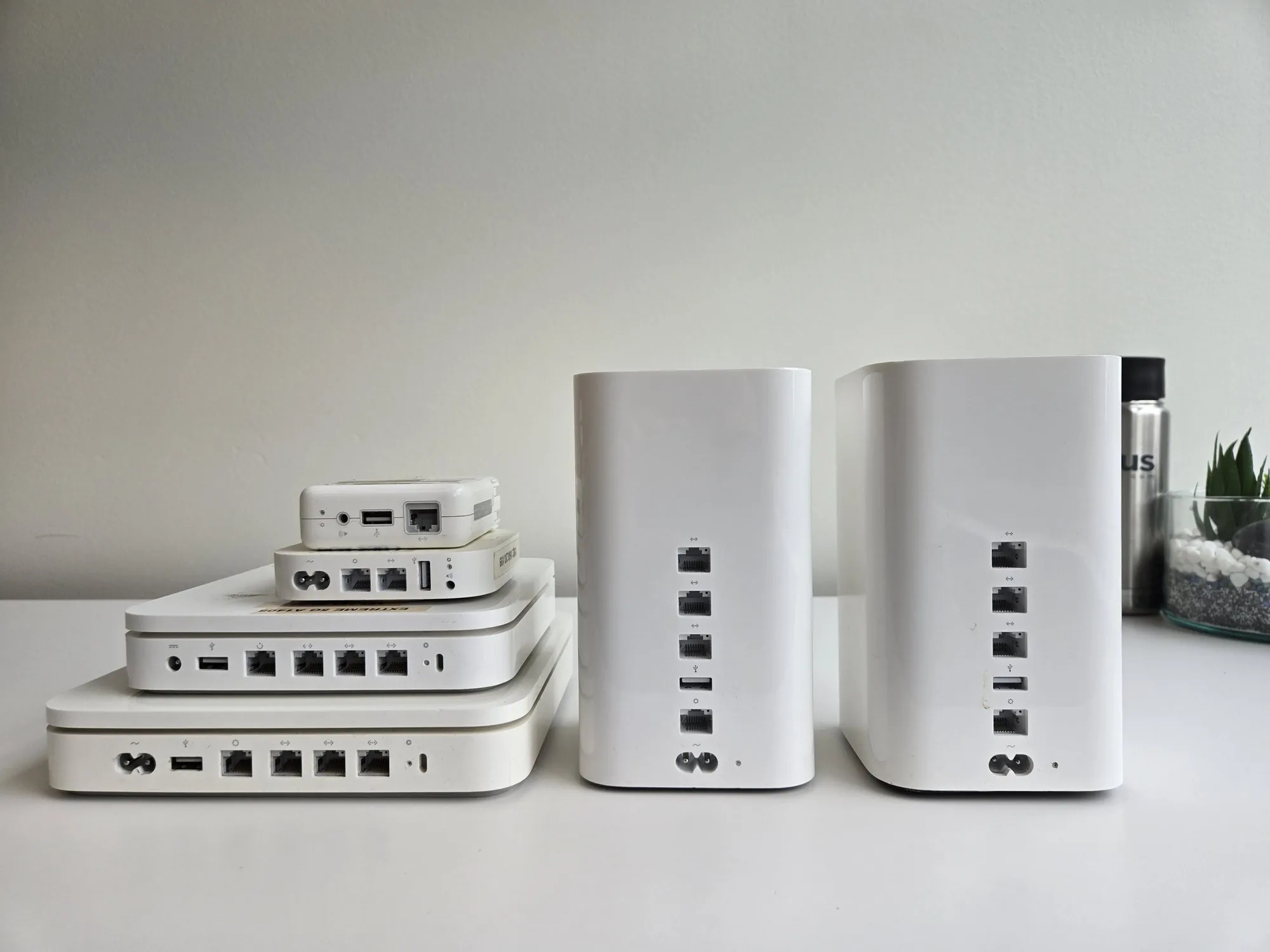
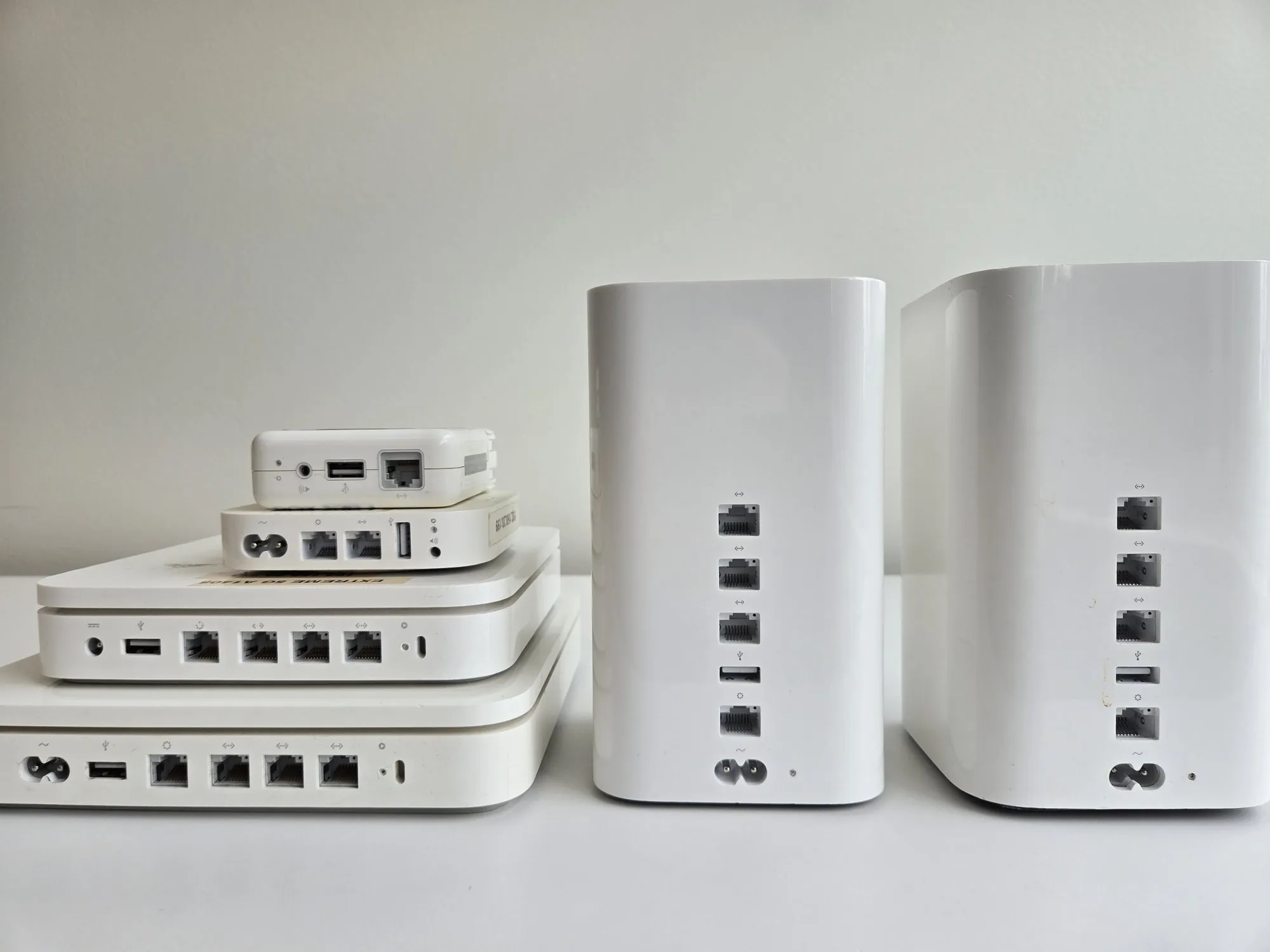
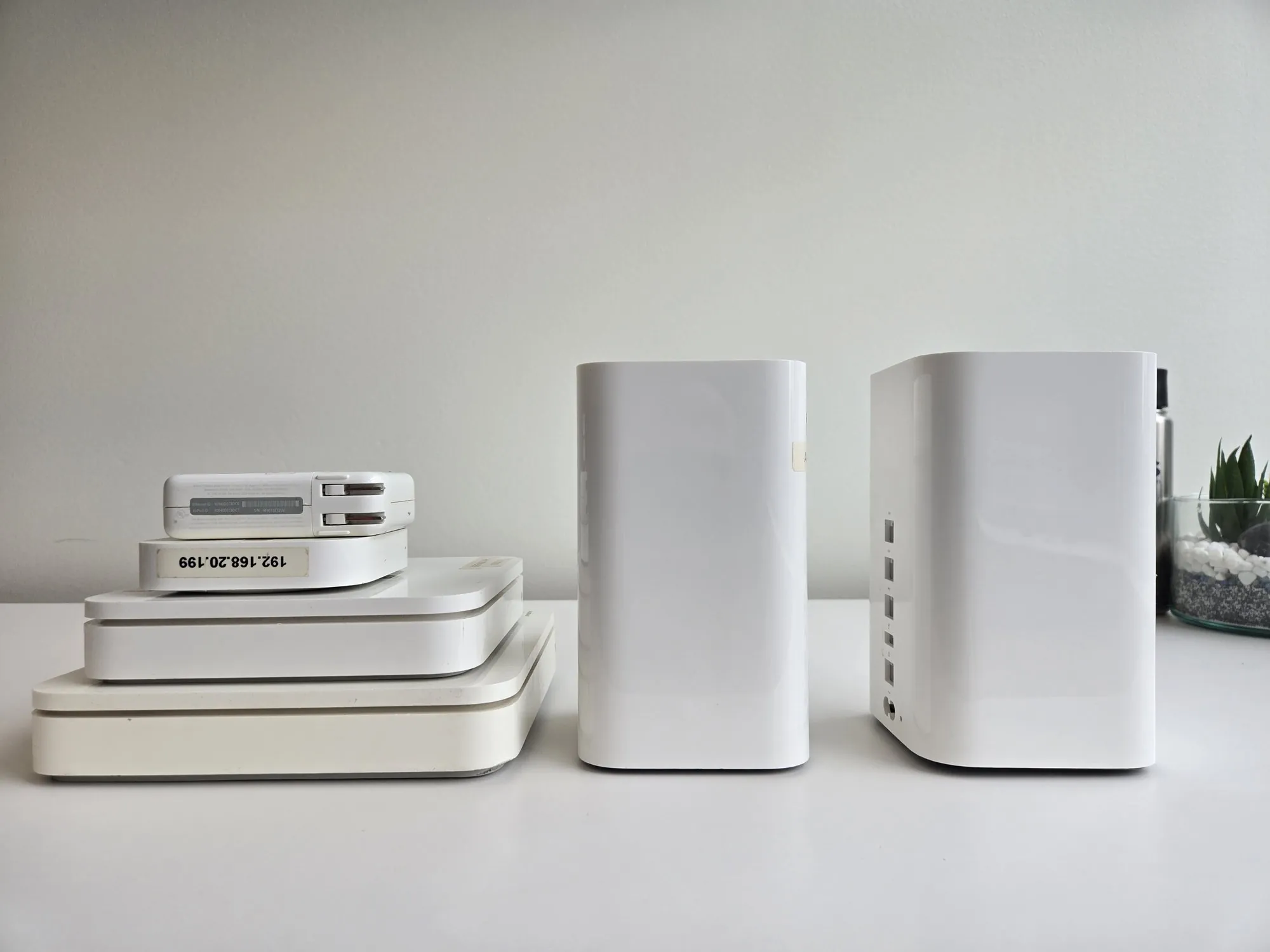
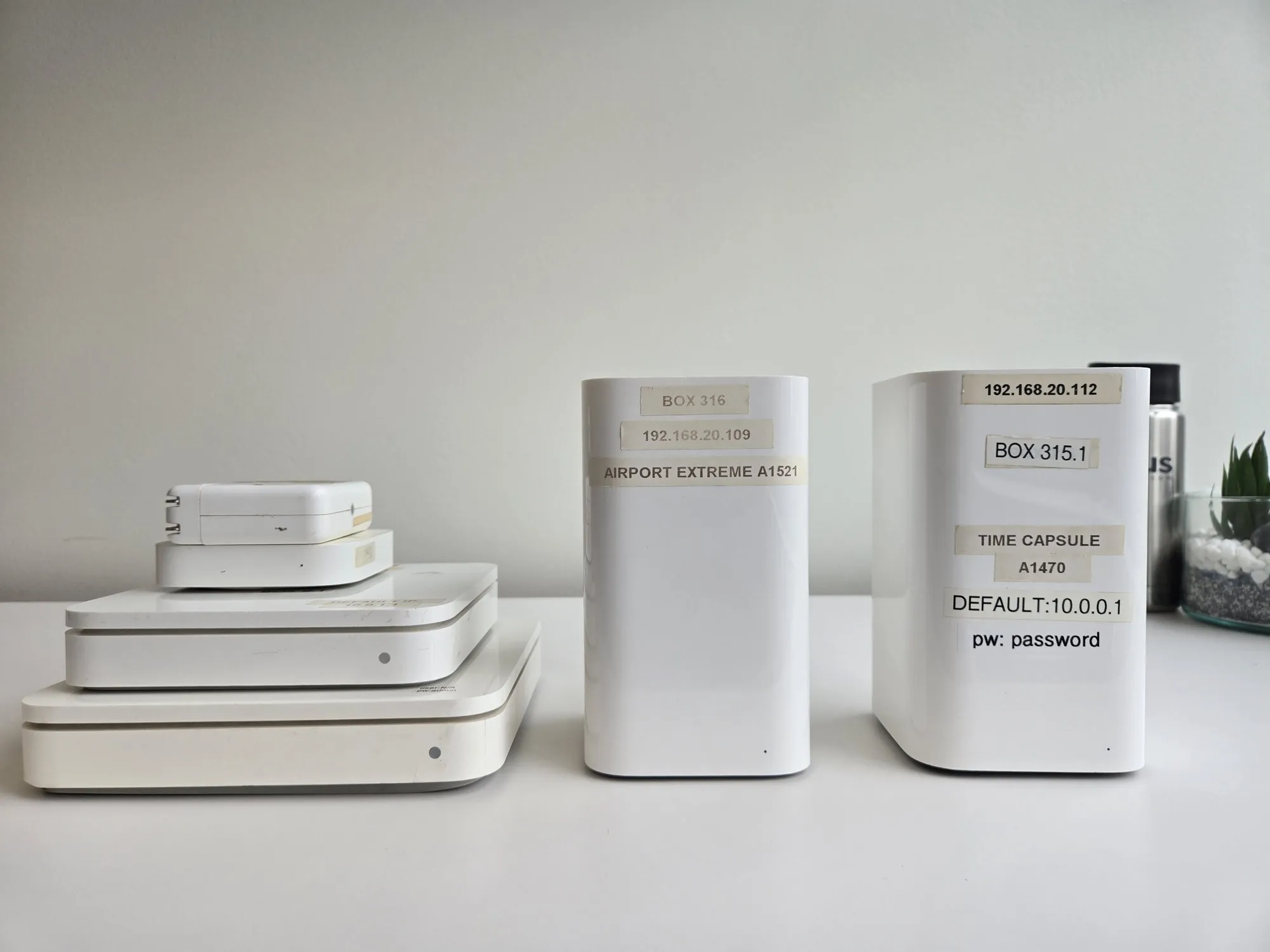
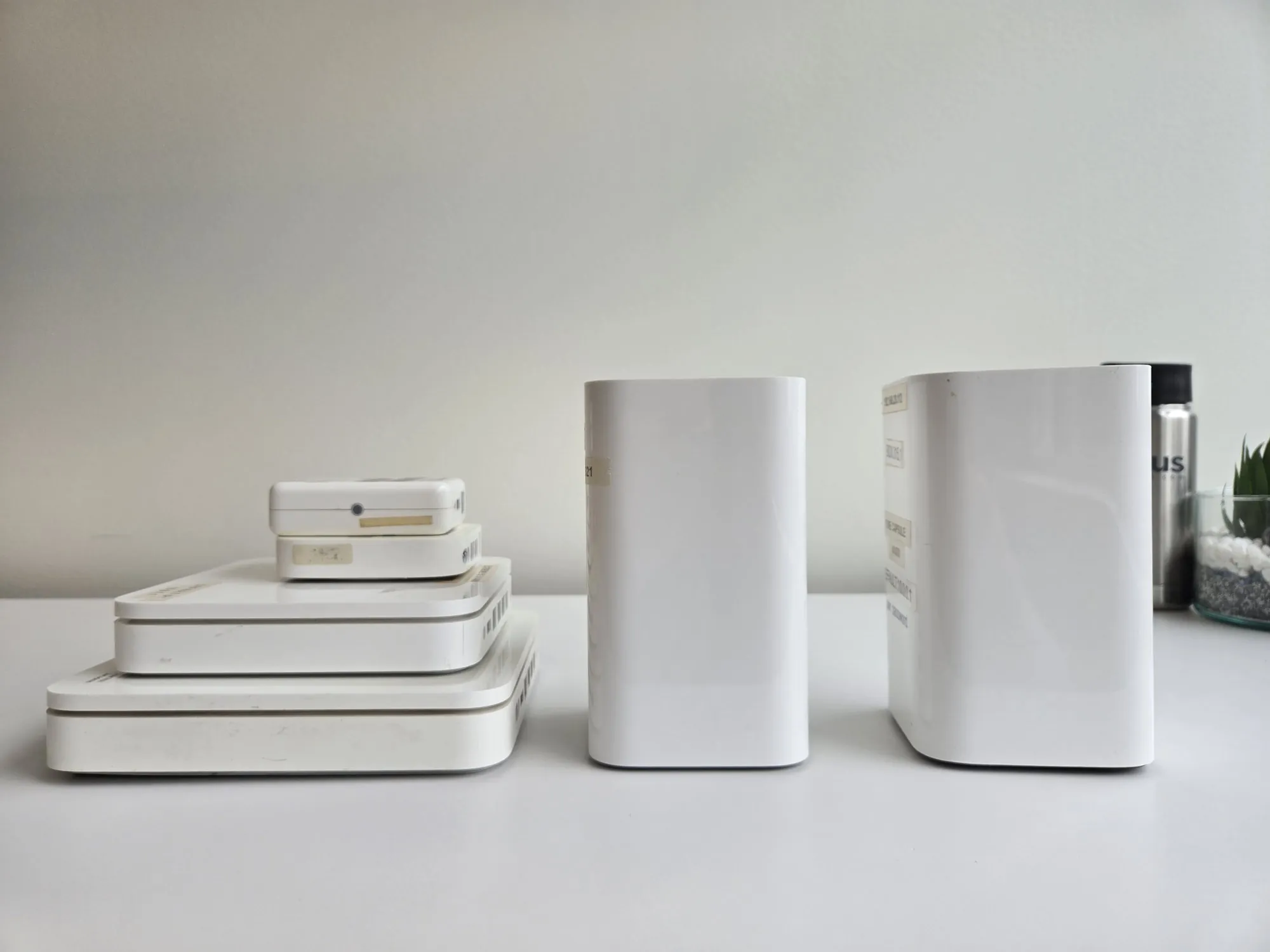
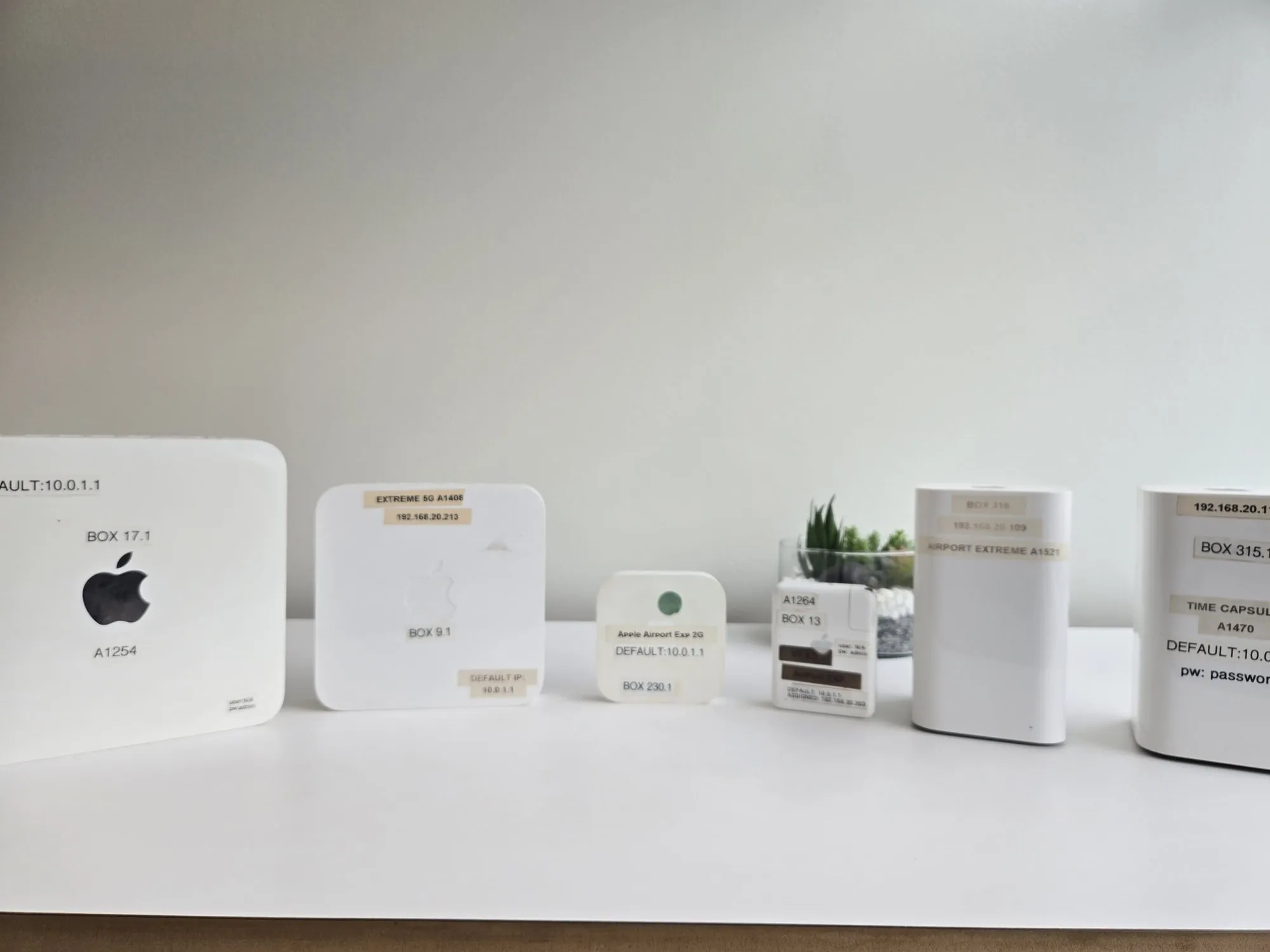
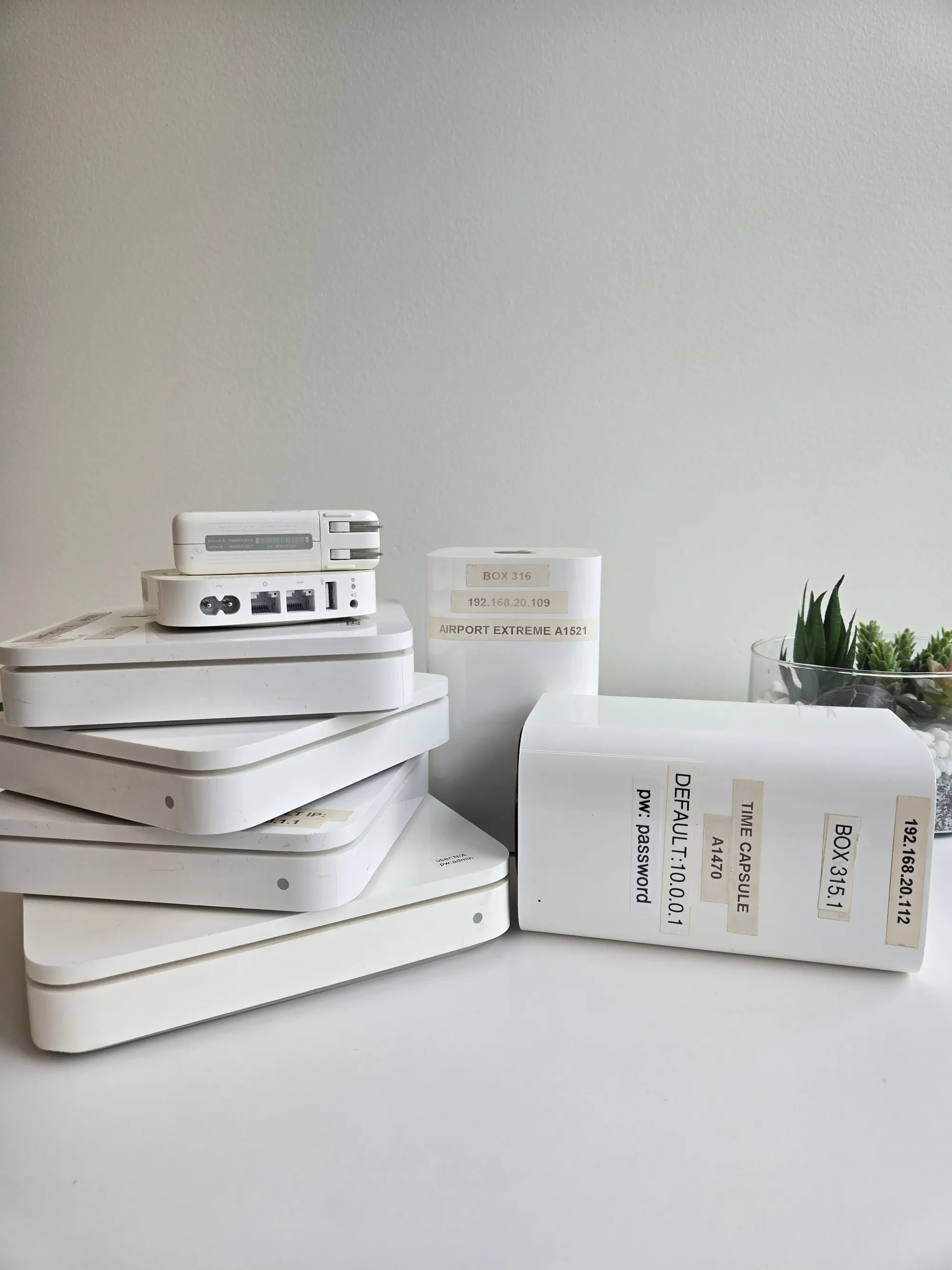
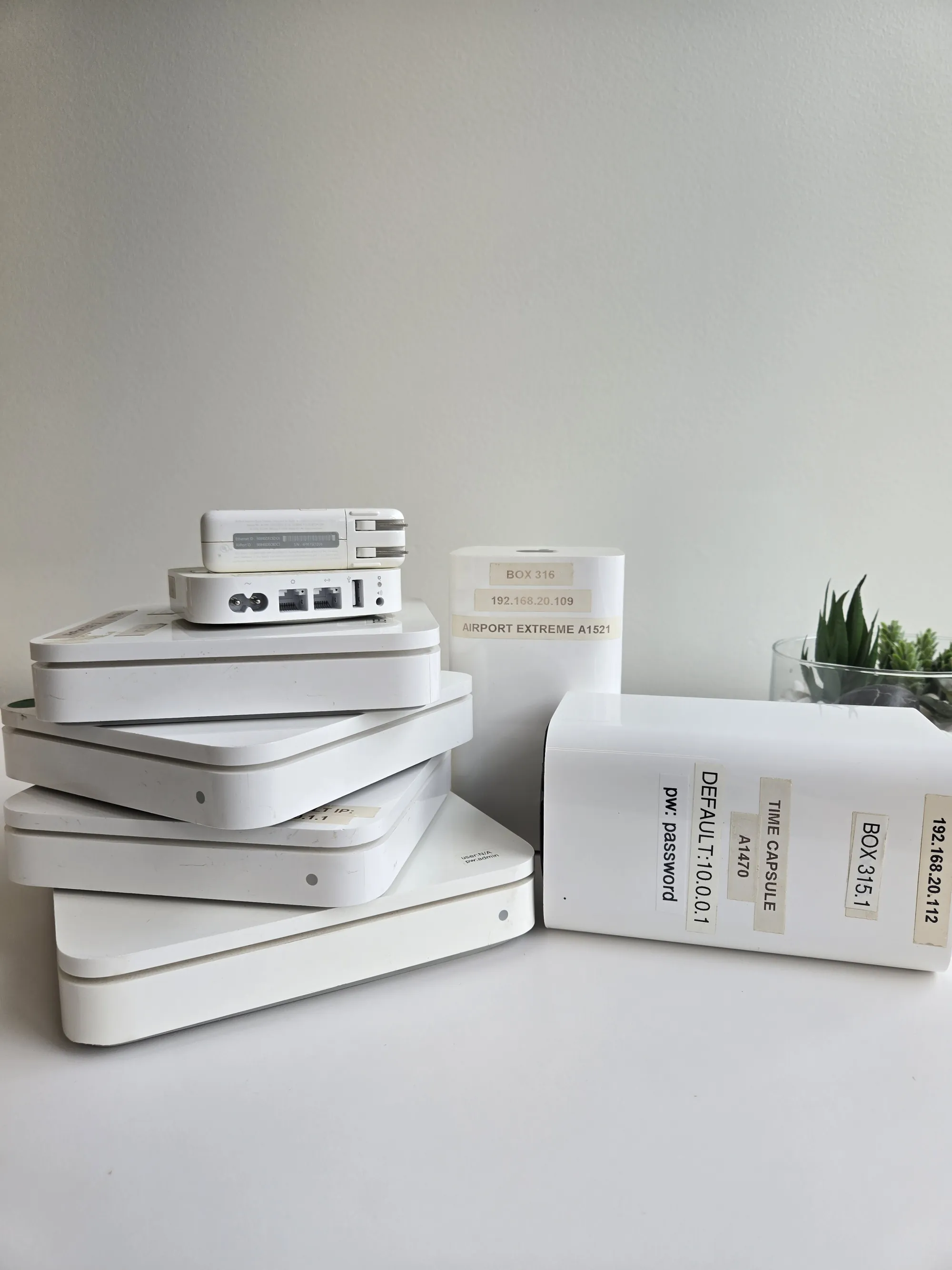
- AirPort (Original, 1999)
- AirPort Base Station (Graphite & Snow, 1999–2001)
- AirPort Extreme (2003)
- AirPort Express (2004)
- AirPort Extreme (802.11n, 2007–2013)
- AirPort Time Capsule (2008)
- AirPort Extreme (Tower Design, 2013)
- AirPort Express (2nd Gen, 2012)
Significance
Apple simplified router setup and management for consumers. The line featured tight integration with macOS, iTunes, and Time Machine. Early innovations included AirPlay streaming via AirPort Express and Time Capsule's network backup capabilities.
The company distinguished routers as consumer products through thoughtful design. This approach influenced competitors toward improved interfaces and integrated functionality, setting a benchmark for what consumer networking hardware could look and feel like.
About the Device Vault
Novus Labs has been building one of the industry's most extensive interoperability libraries since 2008. Our collection spans thousands of devices across wireless access points, phones, tablets, AV equipment, and smart home products, including vintage devices that help us test real-world backward compatibility scenarios.
Learn more about our interoperability services and Interop Device Library.